

ArmBlaster.
1. Same session,
8 weeks.
Don't swap exercises every week. Standardise, then push the numbers.
2. Track
every set.
Weight, reps, tempo, notes. Beat last week by a little, every week.
3. Train
hard.
Warm-up set first, then grind. If 12 reps come easy, the weight is wrong.
The foundation of
a great workout.
Warming up isn't just about getting your muscles ready for lifting heavy, it plays a vital role in your overall health and athletic performance.
Step 1 —
5–10 min of cardio
Light to moderate cardio before lifting primes your heart, lungs and muscles for the workout. It also engages your core to improve stability, posture and strength throughout the session. Activating your core is pivotal.
Step 2 —
Warm-up sets
Jumping straight into heavy lifting is counterproductive. Do 1–2 warm-up sets before each exercise to:
If you don't track it,
you're guessing.
If you're not tracking your workouts, you're leaving progress to chance. To build serious muscle you must push past previous limits and tracking is the only way to make sure you're consistently increasing volume and intensity.
You don't need crazy PRs every workout, but every workout you need to do a little bit more. Standardise and periodise your training, don't create an assortment of new exercises every week. Stick to the basics and you will win.
What & how
to track
The easiest way is a fitness app or the notes app on your phone. Create a one-off template for each training day and copy it forward every week, you'll see and write over last week's numbers. Log: exercises, sets & reps, weight, tempo, notes.
Preacher curl
4 × (W)12 | 12,12,12
15kg → 17.5 → 17.5
tempo 1:1:2:1
note: last set grinder, hold 17.5 next wk
Max out or maximise
nothing.
If you're just counting reps and calling it a workout, you're not building, you're maintaining. This program is for lifters who want to grow. That means training with intensity, chasing failure, and refusing to settle for average effort. You don't grow by doing the motion. You grow by owning the movement, pushing harder every set and every week through total volume and intensity.
Mentality matters. A training partner can push you to hit that one last brutal rep. But when you train alone, that's when it really counts. Dig deep, shut the noise out, and find that extra gear.
- Set 1Feel it out — get the form tight, engage the muscle.
- Sets 2–4Increase the weight. Drop the reps if you have to. But you better be grinding by the end of each set.
- The testIf you're breezing through 12 reps without a fight, you're not training, you're wasting energy and your time.
No challenge. No change.
No intensity. No results.
Eight exercises.
Zero wasted sets.
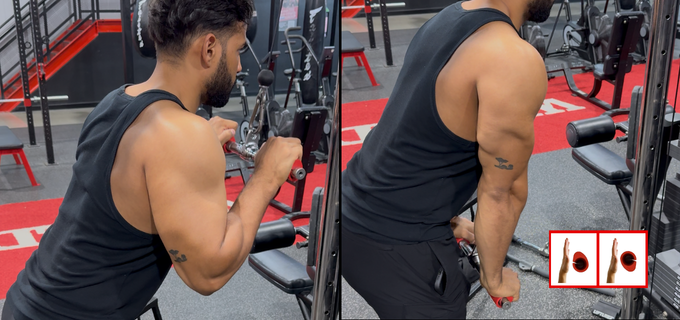
Every exercise: 4 sets — (W) 12 | 12, 12, 12 · tempo 1:1:2:1 · rest 60–90 s. (W) = warm-up set.




Growth happens
between sessions.
Training is the stimulus, growth happens between sessions. You can't out-train a bad week of eating and sleeping. Four things to get right:
Protein
Aim for roughly 1.6–2.2 g per kg of bodyweight per day, spread across meals. Muscle can't be built without the raw material.
Calories
To grow, eat at maintenance or a small surplus. Chronically under-eating means under-recovering — and flat, weak sessions.
Sleep
7–9 hours. It's when the repair happens. A short night shows up in your log as missed reps — note it, don't panic over it.
Hydration
Even mild dehydration cuts strength and focus. Drink through the day, not just at the gym — more on hot days and hard sessions.
Earned the pump?
Tag us.
Post your session, tag @liftlabzau and show PUMPZ in action. We will be sure to share your lifts with other athletes.

One grip.
Two sides.
PUMPZ is a dual-panel performance grip built for pushing and pulling movements across barbells, dumbbells, machines and cable attachments. More control. Better reps.